Winter School Cleaning Challenges in Pennsylvania
What Changes Inside PA Schools When Winter Hits
Snow, slush, and salt increase tracked-in mess, raise slip risk, and make high-touch surfaces feel grimy faster. Consistent day-portering routines keep entryways, restrooms, cafeterias, and gyms safer and more presentable.
Winter in Pennsylvania brings snow, slush, salt, and wet boots into school buildings fast. A hallway that looked fine at 8 a.m. can feel messy by second period. Floors get slick, rugs get soaked, and restrooms and cafeterias take on extra wear when kids spend more time inside.
That is why many districts lean on
education cleaning services to keep classrooms and shared spaces in good shape through the winter stretch. We hear the same questions each year from school leaders and facility staff. What are the biggest winter cleaning problems, what does custodial staff do day to day, and how can schools stay ready when weather and schedules change with little notice?
Winter Weather Brings In More Mess Than You Expect
Snow and slush do not stay outside. They roll in on bus steps, boots, stroller wheels, and the soles of staff shoes. Road salt and parking lot grit tag along too. Once that mix hits a warm building, it melts, spreads, and leaves a film that is hard to miss.
The trouble often shows up in the same spots. Entryways take the first hit, then the mess gets carried down main halls and into stairwells. Gym doors see a lot of traffic from after-school use. Cafeterias get crowded fast, and the front office can see a steady stream of visitors.
Winter grime feels different from fall dirt. It is wetter and heavier. Salt grit can scratch at floors and make mopping harder. Rugs and mats can turn muddy, and that dirt transfers into classrooms, offices, and media centers with every step.
Keeping Floors Safe When It’s Wet Outside
Wet floors are one of the biggest winter worries in schools. Most slip risks are not in the classroom. They happen where people move fast and do not look down. Think vestibules, long tile hallways, locker rooms, and the areas near drinking fountains and restrooms where water ends up on the floor.
A steady routine makes the difference. When weather is messy, we focus on staying ahead of the wet, not chasing it after someone points it out. We keep it simple and repeatable. We check entryways and main paths often, we spot clean when slush builds up, we keep mats and rugs working the way they should, and we watch the corners where water likes to collect near doors and hallway turns.
When those steps happen all day long, the building feels calmer. Walkways stay clearer, tracked-in grime stays closer to the doors, and classroom floors do not get that gray winter look as quickly. People notice when the floors feel dry underfoot, and they may not know why.
Where Winter Messes Show Up First
These areas take the earliest hit and carry the most traffic during messy weather.
Germ "Hot Spots" During Winter School Days
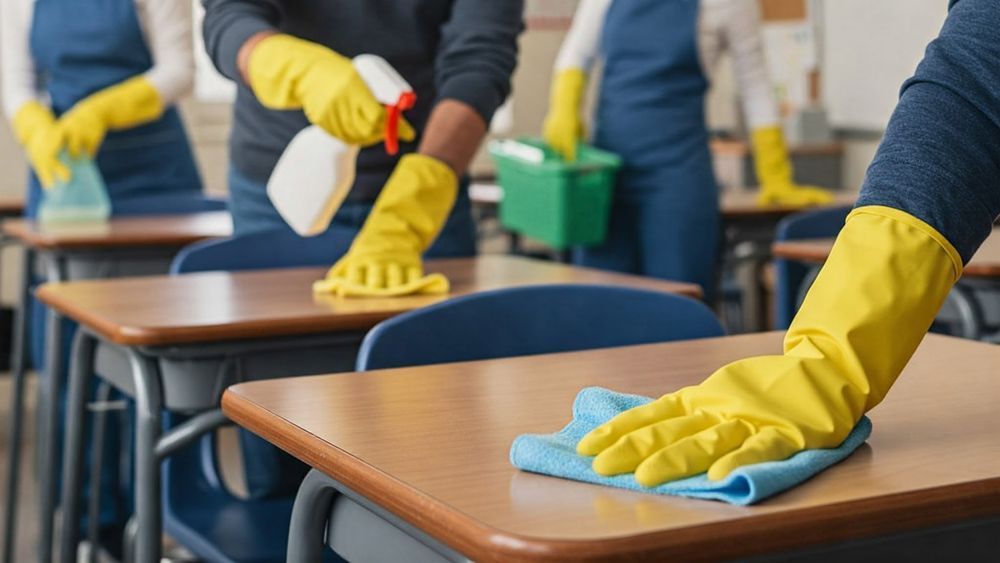
Winter puts students and staff indoors more, and that changes what gets touched and how often. The same surfaces get handled again and again, hour after hour. When those spots do not get regular attention, they can start to look worn and feel sticky or grimy.
The high-touch list is pretty consistent across most buildings. Door handles, railings, desktops, light switches, faucet handles, cafeteria tables, and shared equipment all get used nonstop. Add front office counters, nurses' areas, and staff room tables, and you have a lot of surfaces that need repeat cleaning through the day.
Winter schedules can push more people into the same spaces. Indoor recess, packed hallways after coat drop, and busy lunch periods can change the plan. That can mean more frequent cleaning in the places where hands go all day. This is one place where
education cleaning services are often added to support a clear, consistent routine across classrooms, offices, and common areas.
Restrooms, Cafeterias, and Gyms Need Extra Support in Cold Months
Restrooms work harder in winter. Students are inside more, and traffic stays steady from morning drop-off through dismissal. The biggest winter issues are simple, but constant. Supplies need to stay stocked, floors need repeat checks, and touched surfaces need regular wipe-downs so the room stays decent for the next group.
Cafeterias are their own challenge. Lunch periods are tight, and spills happen fast. Winter gear adds another layer. Coats and gloves pile on benches, and kids track in water that ends up under tables. Trash can build up quicker on cold days too. Cleaning has to fit the schedule, which means moving fast without skipping the basics on tables, floors, and the spots where spills collect.
Gyms and locker areas can look like they never get a break once winter sports pick up. Wet shoes, sweaty gear, and packed events after school create a mix that needs steady attention. Floors need regular care, and doors, rails, and bleachers pick up grime from constant use.
The Staffing Side: Staying Covered When Winter Disrupts the Day
Winter does not just make a bigger mess, it can change the whole school day with snow delays, early dismissals, and last-minute event changes. When that happens, cleaning needs shift fast. A delayed opening can mean a rush of wet traffic all at once. An early dismissal can mean quick resets before an evening event.
Reliable custodial staffing matters most when the schedule is not predictable. Call-offs happen, and travel gets harder in bad weather. When coverage is thin, the basics can slip, like entryways staying wet too long or restrooms falling behind during the busiest blocks of the day.
We have been doing this work since 1989, and winter coverage still comes down to the same practical needs. Schools want steady staffing that fits the building and the schedule. They want people they can trust in their halls and offices. Our hiring steps include reference checks, in-person interviews, and teams that are insured and bonded.
We often see schools use extra support across K through 12 buildings, charter schools, colleges, and specialty schools that serve behavioral health, mental health, special needs, and trade programs. District offices and education support spaces feel winter wear too, with tracked-in slush and high-touch surfaces just like any school building.
Common Winter Problems & The Response That Keeps Schools Steady
Response: frequent entry checks and spot cleaning.
Response: repeatable routes, corners, and turns.
Response: daytime touchpoint wipe cycles.
Safer Floors, Cleaner Spaces, Smoother School Days All Winter
Winter brings a tougher mix of problems for schools, tracked-in slush and salt, slippery floors, and high-touch surfaces that need more frequent attention when everyone is indoors. Restrooms, cafeterias, and gyms carry extra strain too, since traffic and wet gear can pile up from morning to night.
Professional custodial staff help by sticking to steady routines, responding quickly during the day, and keeping coverage in place when weather changes the schedule. Winter can be unpredictable, and steady coverage makes a big difference when buildings are busy and wet all day. Our
education cleaning services support school districts across Pennsylvania, along with colleges and specialty schools that need dependable day-to-day help in winter conditions. Contact us to talk about how Ames Janitorial can provide extra coverage or a more consistent cleaning setup for the cold months.
Keep Floors Safer and Routines Steady All Winter
Ames Janitorial supports Pennsylvania schools with dependable custodial coverage and repeatable winter cleaning routines. If you need extra coverage or a more consistent setup, let’s talk.
Request a Cleaning Quote