Why School Cleaning Coverage Matters for Student Health
Why cleaning coverage matters (especially in winter)
When daily janitorial coverage drops, small messes turn into health, safety, and facility problems fast — and the burden shifts onto teachers and staff.
Routine stays intact
Trash, restrooms, and shared spaces stay “ready” for the next class.
Illness spread drops
High-touch surfaces get wiped before germs move classroom to classroom.
Safety risks get caught
Spills, clutter, and wet entryways are handled before slip-and-falls.
Facilities last longer
Floors, carpets, restrooms, and HVAC areas avoid avoidable wear and damage.
Planning tip: build a backup plan for winter call-offs so coverage doesn’t vanish when you need it most.
Talk coverageWhen a school lacks proper cleaning coverage, problems show up fast. Without someone to handle the daily upkeep, classrooms, restrooms, and shared spaces can fall into disorder quickly. Our janitorial services for schools play a big part in helping students stay healthy and learn in a safe space. With more than 35 years of experience serving schools and businesses across Pennsylvania, we have seen how steady coverage supports safe, productive classrooms.
This becomes even more
important during the winter months. Between colds, flu season, and students spending more time indoors, it is the worst time for janitorial gaps. Schools need clean spaces just to function well. If those services disappear, the impact is seen in more ways than one.
Small Problems Add Up Fast
One missed cleaning day may not raise alarm bells, but without regular attention, basic issues start piling up at a surprising pace.
You will notice things like:
- Trash bins overflowing in hallways and classrooms
- Restrooms running out of soap, paper towels, or toilet paper
- Spills in the cafeteria or classrooms staying sticky and unclean
These small disruptions get in the way. A messy desk or sticky floor is not just annoying, it can affect how comfortable and focused students and staff feel. Once messes begin to pile up, they attract pests and leave behind unpleasant odors. From there, the atmosphere in the building starts to feel less welcoming and more chaotic.
Without cleaning support in place, it is not just about mess, either. Regular routines begin to unravel. Supplies are not stocked. Shared areas are not ready for use. Teachers and students can sense when the environment shifts, and it often leads to more distraction and stress in the classrooms.
Missed coverage doesn’t stay small for long
This “cascade” makes it easy for administrators to explain why consistency matters.
- Trash and restrooms start falling behind
- Cafeteria spills stay sticky
- Teachers begin “filling gaps”
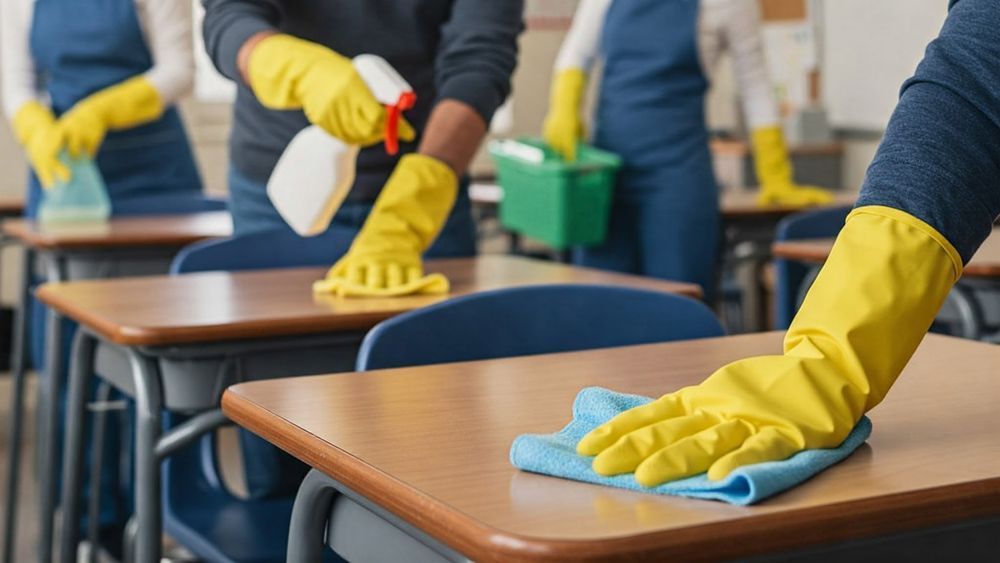
- High-touch germs linger on desks and handles
- Odors + clutter increase distraction
- Slip risks rise as wet spots go unchecked
- Pests and stains become harder to reverse
- More absences (students + staff)
- Wear turns into repair and replacement costs
Health and Safety Risks Rise
Clean spaces help prevent illness from spreading. Without frequent disinfecting and sanitizing, germs can stick around on desks, doorknobs, and shared surfaces. This becomes a bigger issue in the colder months when students are indoors more often and sicknesses travel quickly.
When janitorial services for schools are missing, it is easier for things like colds, stomach bugs, or the flu to make their way through classrooms. More absences follow, and not just among students. Staff and teachers get sick too, which puts extra strain on the school.
There is another concern here, physical safety. Without anyone watching for floor spills, loose clutter, or icy walkways, the chance of slip-and-fall accidents increases. Wet floors are not just a hazard on rainy or snowy days. Even indoor spills or damp mops left unmarked can become a problem. Young students, staff, and visitors could all be at risk.
Stress Builds for Staff and Teachers
When cleaning coverage breaks down, pressure does not disappear. It slides onto the shoulders of teachers, staff, and administrators.
Here is what often happens:
- Teachers end up tidying classrooms on their own
- Admins scramble to find short-term solutions or make phone calls for help
- Staff who already have full days are pushed to cover extra duties
These workarounds might hold things together for a short time, but they are not built to last. Teachers are hired to teach, not to disinfect door handles or clean up restrooms before lunch. When they are pulled away from instruction to handle janitorial issues, it harms the learning experience and morale.
When schools feel messy or out of sorts, the overall tone shifts. Anxiety and low energy can take hold, and that feeling wears down the people who spend the most time in the building every day.
Long-Term Damage to School Facilities
Skipping regular cleaning has long-term consequences for school buildings and the things inside them. Floors get scuffed, stained, or scratched. Carpets pick up dirt and odors that do not come out easily. Restrooms that go uncleaned suffer from buildup and damage that is tough to reverse.
Dust and grime can start collecting in places people do not always think about, like vents, windowsills, or HVAC units. When those areas are not monitored and cleaned regularly, it does not just affect the way the school looks. It affects air quality and aging of equipment too.
Maintenance delays turn into bigger repair bills. What might have taken a 10-minute clean could turn into a replacement down the road. That is money, time, and disruption that could have been avoided with regular, everyday care.
Why Reliable Janitorial Coverage Should Be a Priority
Every school runs better when cleaning gets taken seriously. It is not just about wiping down whiteboards or emptying trash. It is about keeping students safe, preventing sick days, and protecting the space people count on every day.
Having consistent janitorial staff helps regular school days go more smoothly.
Daily cleaning for classrooms, hallways, and common areas, along with periodic deep cleaning and disinfection, keeps the building ready for the next group of students. For charter and private schools, customized cleaning plans and flexible schedules help match service levels to enrollment, events, and how each campus uses its space. We also offer full-time and part-time custodial staffing so Pennsylvania schools can fill vacancies and maintain coverage during busy seasons.
Teachers are not worrying about restroom supplies. Admins are not chasing down afternoon cleanups. Students can focus without being distracted by mess or discomfort.
Reliable coverage means planning ahead and being prepared for times when regular staff might be unavailable. That is especially true during winter, when staffing gaps from illness or vacation can sneak up quickly.
When those plans are in place, everyone benefits.
Clean Schools Help Everyone Do Their Best
Clean, calm spaces give students the best shot at learning. When classrooms are ready, restrooms are stocked, and hallways are tidy, there is more focus and less frustration. Teachers can stick to teaching. Students can stay healthier through the season. Parents can feel better knowing the space is cared for.
Making janitorial coverage a part of the school’s larger plan creates a more reliable, supportive place for everyone inside the building. A clean school does not just reflect pride. It helps shape how each day feels, for those who learn there and those who help it run.
At Ames Janitorial, we know that schools depend on smooth days and clean spaces to support learning, and when janitorial coverage falls short, student health, classroom focus, and building upkeep are quickly affected. That is why we offer reliable support for everything from restrooms to common areas. If your school is experiencing limited coverage, explore how our
janitorial services for schools
can keep your campus on track. Contact us today to discuss what your campus really needs.
Keep coverage steady when staffing gets tight
Full-time or part-time custodial staffing can help schools fill vacancies and maintain daily routines—especially during winter call-offs.
FAQ: Cleaning coverage in schools
Short answers you can use when staff, parents, or leadership ask “what’s the real impact?”
What gets worse first when coverage drops?
Restrooms and trash are usually the first visible problems. After that, spills linger, odors build, and high-touch surfaces go longer without disinfecting.
Why do gaps matter more in winter?
Students are indoors more, illness spreads faster, and wet entryways increase slip risk. Winter call-offs also make staffing gaps more likely.
What’s the simplest “minimum coverage” plan?
Protect the essentials: restrooms + supplies, cafeteria spill response, trash removal, and one consistent disinfecting cycle for high-touch areas.
How does consistent coverage help classroom focus?
When rooms feel clean and supplies are stocked, teachers stay focused on instruction instead of cleaning workarounds—and students have fewer distractions.